Most real estate agents do not have an income problem. They have a business planning problem.
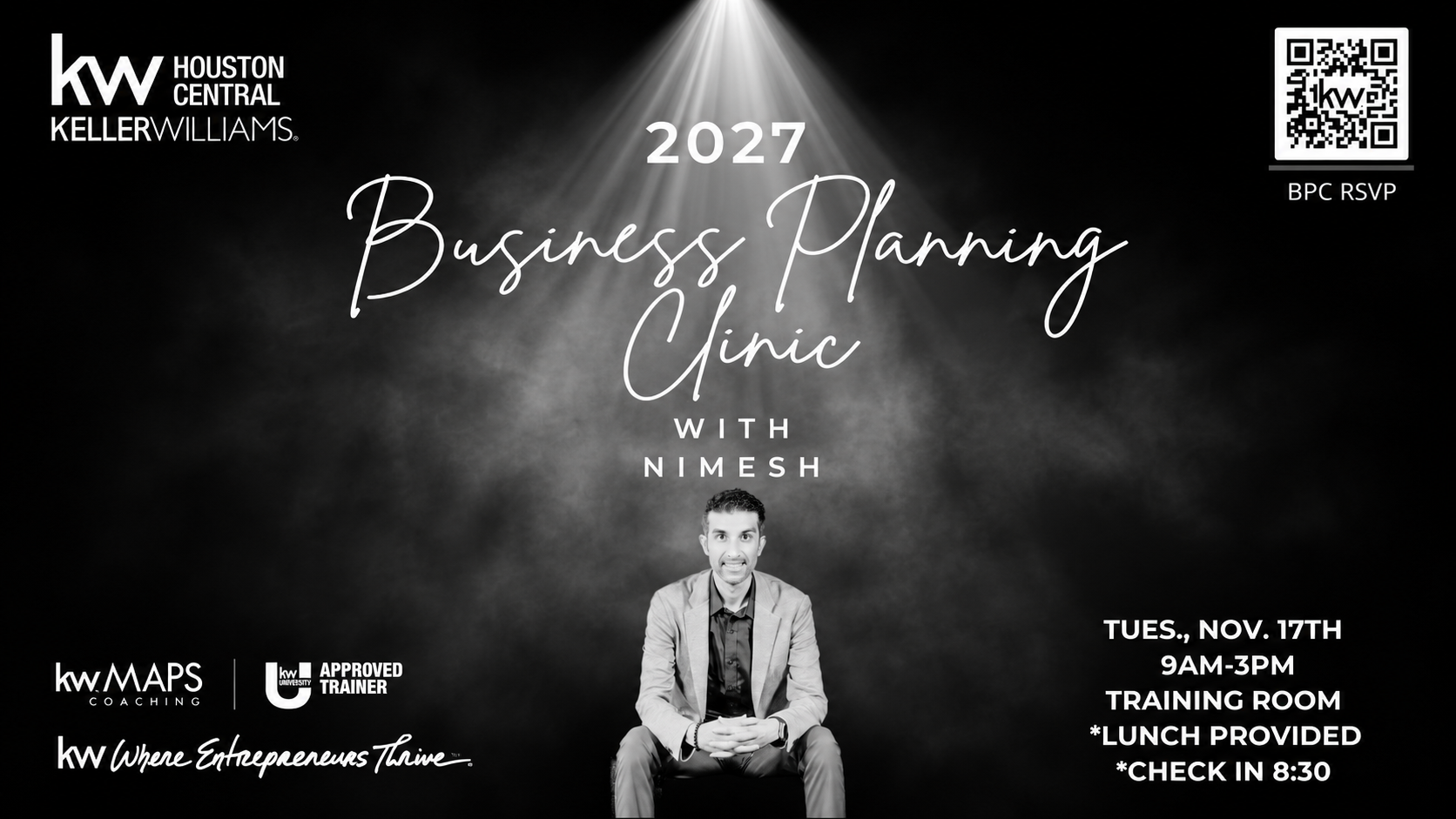
Many agents start each year hoping for more closings without mapping out the daily steps needed to earn them. A strong brokerage helps real estate agents make more money by combining practical lead-generation training, business consulting, conversion coaching, and financial accountability. At Keller Williams Houston Central (KWHC), the 2027 Business Planning Clinic led by Nimesh gives local agents a dedicated space to turn 2027 income goals into clear daily actions.
TL;DR: Key Takeaways
- Plans Drive Income: Connecting annual revenue targets to weekly lead-generation and appointment habits replaces guesswork with predictable execution.
- Profit Beats Volume: Gross commission income measures total sales, while net profit reflects what you actually keep after taxes and expenses.
- Brokerage Environment Matters: Brokerages support growth through coaching, contract guidance, technology, and peer accountability—though agent execution drives final results.
- KWHC Turns Plans Into Action: KWHC pairs business planning with programs like Breakthrough 120, Ignite, KW Command, and productivity coaching with Kimberley Gibbons.
- 2027 Clinic Focus: Hosted at KWHC in Downtown Houston on November 17, 2026, Nimesh’s clinic equips agents with a practical roadmap for 2027.
Why Do Real Estate Agents Need a Business Plan?
Being busy is not the same as building a profitable business. Showing homes, answering emails, and attending networking mixers can fill a calendar without moving revenue forward.
According to the U.S. Small Business Administration (SBA), a written business plan serves as a practical roadmap to structure, run, and grow an enterprise. Real estate agents operate as independent business owners, which means every dollar earned and spent affects their bottom line.
A solid plan addresses five core areas:
- Income Consistency: Replacing seasonal income swings with steady monthly pipeline activity.
- Lead Generation: Defining exact daily outreach targets instead of waiting for referrals to appear.
- Expense Control: Tracking marketing, licensing, and desk costs so overhead does not quietly eat commissions.
- Financial Goals: Setting clear targets for taxes, savings, and personal take-home pay.
- Measurable Activities: Focusing on controllable inputs like conversations, appointments, and signed agreements.
How Can a Real Estate Brokerage Help Agents Make More Money?
A real estate brokerage can help agents make more money by providing repeatable lead-generation training, conversion coaching, listing education, CRM systems, and financial accountability. These resources shorten the learning curve and help agents execute higher-value activities consistently.
However, brokerage support creates opportunity rather than guaranteed income. An agent’s actual earnings depend on daily execution, local market conditions, conversion rates, and expense discipline.
At Keller Williams Houston Central, leadership structures support around two distinct financial metrics:
- Gross Commission Income (GCI): The total commission dollars generated from closed transactions before splits, fees, or business expenses.
- Net Profit: The actual take-home income remaining after brokerage splits, marketing costs, insurance, taxes, and operating overhead.
KWHC helps agents grow GCI through listing workshops, open-house systems, and script practice. At the same time, business consulting and productivity coaching help agents protect net profit by tracking return on investment and cutting wasteful spending.
How Many Transactions Does an Agent Need to Earn $150,000?
To earn $150,000 in gross commission income at an average commission of $7,500 per closing, an agent needs 20 closed transactions. Working backward using hypothetical conversion rates shows the exact activity required to reach that target.
Note: The following numbers are a purely hypothetical planning exercise, not a Houston market average or an earnings guarantee. Actual commission rates, sales prices, and conversion ratios vary widely by agent and neighborhood.
Here is how a backward-planned funnel looks using sample conversion benchmarks:
- Annual GCI Goal: $150,000
- Average GCI per Closing: $7,500
- Closed Transactions Needed: 20 closings ($150,000 divided by $7,500)
- Signed Buyer/Seller Agreements Needed: 25 agreements (assuming 80% of signed clients close)
- Consultations/Appointments Needed: 50 appointments (assuming 50% of appointments result in a signed agreement)
- Lead Conversations Needed: 1,000 quality real estate conversations (assuming 20 conversations per appointment)
Breaking $150,000 down over a 50-week work year changes how an agent views their calendar. Instead of worrying about finding 20 buyers or sellers, the agent simply needs 1 appointment per week and 20 real estate conversations per week.
Remember that $150,000 in GCI is top-line revenue. After factoring in brokerage splits, marketing expenses, association dues, and self-employment taxes, take-home pay will be lower than GCI. Planning for taxes and expenses upfront prevents year-end surprises.
What Should Agents Look for in a Brokerage That Helps Increase Production?
Real estate agents should look for a brokerage that combines accessible leadership, practical training, structured productivity coaching, reliable technology, and peer accountability. A strong brokerage bridges the gap between knowing what to do and actually doing it every week.
When evaluating a brokerage in Greater Houston, look for these specific pillars:
- Accessible Leadership: Leaders who know your numbers and help troubleshoot pipeline bottlenecks.
- Actionable Business Planning: Annual and quarterly planning sessions that connect personal financial goals to daily habits.
- Applied Training: Courses focused on real-world contracts, negotiations, and lead generation rather than theory alone.
- Productivity Coaching: Dedicated coaching that tracks activity metrics and refines buyer and seller presentations.
- Contract and Risk Support: Timely guidance on Texas Real Estate Commission (TREC) forms and transaction compliance.
- Integrated Technology: A centralized customer relationship management (CRM) platform that automates follow-up.
- Listing and Marketing Resources: Hands-on field exposure and modern marketing workflows to win more listings.
- Collaborative Culture: Masterminds and leadership councils where top producers share proven systems.
Keller Williams Houston Central builds its Downtown Houston office around these exact pillars, offering structured pathways from pre-licensing through advanced team leadership.
Meet Nimesh: Bringing Business Planning Into Focus
Strong business planning requires guidance from leaders who understand both brokerage operations and daily agent production. For KWHC’s 2027 Business Planning Clinic on November 17, 2026, the office brought in Nimesh to lead the full-day workshop at 1201 Fannin St., Suite 350.
Nimesh brings three verified leadership and training credentials to the room:
- Team Leader at Keller Williams Southwest: Experience guiding office growth, recruiting, and agent retention in the Greater Houston market.
- KW MAPS Coach: Specialized training in coaching agents to identify blind spots, improve conversion, and scale production.
- KWU Approved Trainer: Certified instruction in Keller Williams University’s proven business models and economic frameworks.
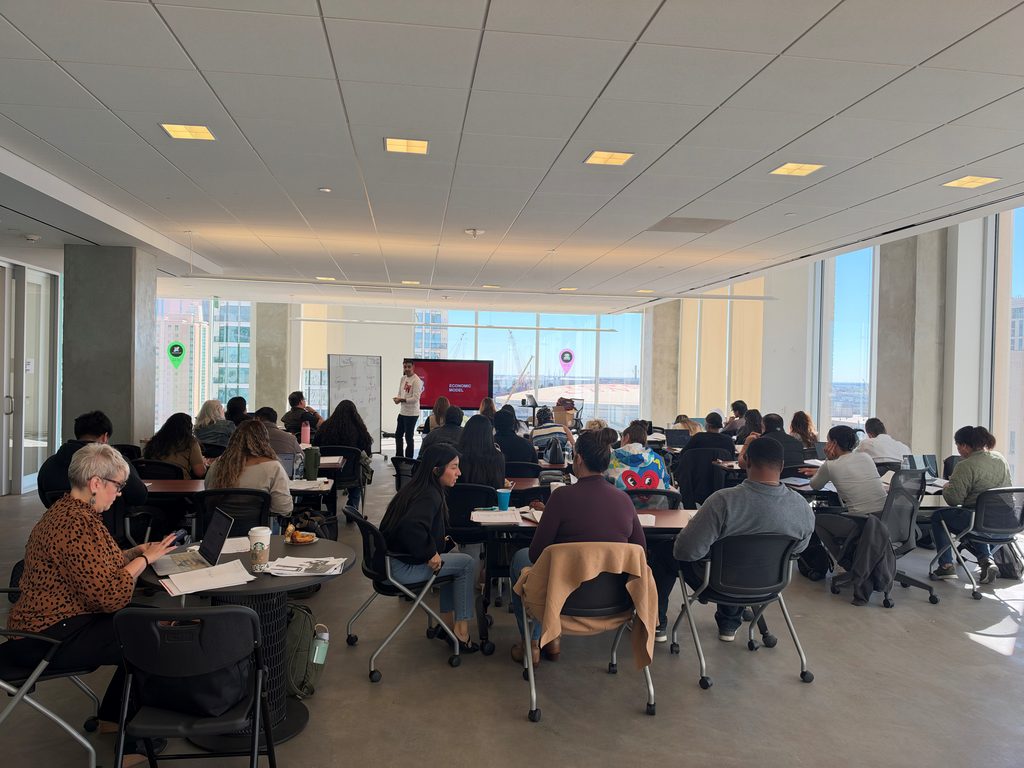
Centered on the theme “Your Best Year Doesn’t Happen by Accident. It Starts with a Plan!”, the clinic focuses on practical business modeling rather than motivational hype. Agents spend the day examining their economic models, lead-generation sources, and expense budgets so they leave with a clear roadmap for 2027.
How Do Agents Build a Profitable Real Estate Business?
Agents build a profitable real estate business by treating their practice like a true enterprise—tracking conversion metrics, controlling overhead, building repeatable lead systems, and adding leverage only when revenue justifies it. Chasing one deal at a time creates burnout, while building systems creates long-term equity.
To move from transaction-chasing to sustainable profitability, focus on ten operational habits:
- Set Profit-First Financial Goals: Decide how much net income you need to fund your life, pay taxes, and save before setting volume targets.
- Track Conversion Rates: Measure how many leads become appointments, how many appointments sign, and how many contracts close.
- Prioritize Listing Opportunities: Listings create market visibility, generate buyer inquiries, and offer strong time leverage compared to showing dozens of homes.
- Protect Average Commission Income: Learn to articulate your value clearly during consultations so you do not default to fee discounts.
- Audit Operating Expenses Monthly: Cut unused software subscriptions and unproven lead portals that fail to generate positive returns.
- Build a Referral Engine: Stay in systematic contact with past clients and your sphere of influence through calls, notes, and client events.
- Master Your CRM: Log every contact, set automated follow-up reminders, and segment buyers and sellers by timeline.
- Time-Block Lead Generation: Protect two to three hours every morning for prospecting before opening email or handling paperwork.
- Elevate Client Service: Create repeatable checklists for every listing and buyer transaction to earn five-star reviews and repeat business.
- Add Leverage Strategically: Hire administrative or transaction support only after consistent closings make your hourly time worth more in front of clients.
Why Does Business Planning Matter for New and Experienced Agents?
Business planning evolves as an agent’s career grows, shifting from basic habit formation in year one to margin optimization and team leverage in later years. Every stage of production requires a different plan.
- Newly Licensed Agents: Need a 90-to-120-day launch plan focused on building a contact database, learning scripts, hosting open houses, and securing first agreements.
- Growing Agents: Need consistency in follow-up and consultation skills to move from sporadic closings to steady monthly income.
- Experienced Agents: Need to audit lead sources, increase listing inventory, and eliminate low-return busywork that caps production.
- Top Producers: Need high-level expense management, administrative leverage, and wealth-building strategies to protect personal time and profit margins.
- Team Leaders: Need clear recruiting standards, training systems, and profit-and-loss tracking to ensure team growth remains profitable.
- Investment-Focused Agents: Need criteria for analyzing cash flow, cap rates, and renovation budgets alongside traditional retail brokerage goals.
How Does KWHC Turn Business Planning Into Action?
A business plan only works when supported by daily training, technology, and coaching. Keller Williams Houston Central offers an integrated ecosystem of programs that help agents execute their plans throughout the year—though agents choose the specific courses and tools that match their career stage.
- Breakthrough 120: A structured 120-day curriculum designed to establish daily database habits, lead follow-up, open-house strategies, social media outreach, and consistent appointments.
- Ignite and Ignite After Dark: Foundational business-development courses covering lead generation, buyer and seller consultations, and negotiation skills, with evening options for dual-career agents.
- Real World Real Estate: Field-based training hosted at active agent listings across Houston, giving agents practical exposure to pricing, staging, and property evaluation.
- KW Command: Keller Williams’ integrated technology platform for contact management, smart follow-up plans, marketing templates, and pipeline organization.
- Power Hitter: Practical workshops focused on technology adoption, lead management, and modern productivity workflows.
- Productivity Coaching: Structured agent-growth support led by Kimberley Gibbons, Director of Agent Growth and Productivity, who helps agents align daily execution with their business goals.
- Business Accountability: Ongoing check-ins and milestone tracking led by office leadership to help agents spot pipeline gaps early.
- Contract and Risk Management Education: Regular guidance on Texas contracts, addenda, and compliance standards to protect clients and reduce transaction stress.
- Masterminds and ALC: Peer collaboration groups and the Agent Leadership Council (ALC), where top producers contribute to office culture, training, and governance.
Why Does Accountability Matter After Business Planning?
Writing down annual goals is easy, but sticking to them in month four or month nine is where most agents struggle. Without accountability, urgent daily distractions quickly replace important lead-generation habits.
Consistent accountability turns a static document into a living management tool. When agents review their numbers weekly with a coach or leadership partner, they gain clarity across eight key metrics:
- Weekly Lead-Generation Hours: Confirming prospecting time actually happened.
- Appointments Held: Tracking face-to-face or virtual consultations with qualified buyers and sellers.
- Conversion Rates: Spotting whether an agent needs help getting appointments or closing them at the table.
- Pipeline Health: Reviewing active buyers, upcoming listings, and pending contracts.
- Listing Inventory: Measuring the ratio of listings taken versus buyer transactions.
- Closed Volume and GCI: Comparing actual year-to-date revenue against monthly targets.
- Net Profitability: Checking operating expenses against gross income.
- Quarterly Plan Adjustments: Updating marketing tactics as Houston market conditions shift.
As Texas Real Estate Research Center data frequently highlights, shifting mortgage rates and inventory levels require agents to adapt their pricing and seller conversations throughout the year. Regular reviews help agents adjust early instead of waiting until the end of the quarter.
Five Steps to Build a Stronger Real Estate Business in 2027
You do not need to overhaul your entire career overnight to improve your 2027 results. Start with five practical steps you can implement this week:
- Calculate Your Exact Net Income Target: Add up your personal living expenses, tax reserve, and savings goals so you know the exact take-home pay your business must produce.
- Audit Your Past 12 Months of Closings: Identify where every closed transaction originated—past clients, open houses, online leads, or sphere—and double down on your top two sources.
- Clean and Segment Your Database: Put every contact into KW Command or your CRM with accurate phone numbers, emails, and tags for likely buyers, sellers, and referral advocates.
- Block Non-Negotiable Prospecting Time: Put two hours of daily lead generation on your calendar before noon and treat it like a closing appointment.
- Schedule a Business Consultation: Sit down with a productivity coach or office leader to pressure-test your 2027 numbers and set up weekly accountability.
Why Is Keller Williams Houston Central Investing in Agent Development?
Hosting events like the 2027 Business Planning Clinic reflects Keller Williams Houston Central’s broader belief that agents succeed long-term when they run disciplined, profitable businesses. Located in Downtown Houston at 1201 Fannin St., Suite 350, KWHC serves agents working across Houston’s diverse neighborhoods—from the Inner Loop and Medical Center to Pearland, Katy, and Cypress.
Rather than leaving agents to figure out lead generation and contracts alone, KWHC invests in dedicated leadership, structured coaching under Kimberley Gibbons, field training, and collaborative masterminds. For new and experienced agents evaluating Houston brokerages, KWHC offers a transparent, education-driven environment built to support sustainable career growth.
Frequently Asked Questions
1. How can a brokerage help real estate agents make more money?
A brokerage helps agents grow income by providing structured lead-generation training, conversion coaching, listing education, CRM tools, and financial accountability. These resources help agents win more appointments and manage expenses. However, actual income depends on each agent’s daily execution, conversion skills, overhead control, and local market conditions.
2. What should I look for in a brokerage to increase production?
Look for accessible leadership, practical business planning, hands-on training, productivity coaching, contract support, and modern CRM technology. You should also evaluate whether the office offers peer accountability and collaborative masterminds. Strong brokerages help you turn classroom knowledge into consistent weekly appointments and signed agreements.
3. How do I build a profitable real estate business?
Build a profitable business by setting net-profit goals first, working backward into weekly prospecting targets, and tracking conversion rates. Focus on repeatable lead generation, prioritize listings, control monthly software and marketing expenses, and use a CRM for consistent follow-up. Add administrative leverage only when steady revenue justifies the cost.
4. How many transactions do I need to earn $150,000?
In a hypothetical scenario where your average gross commission income is $7,500 per closing, you need 20 closed transactions to reach $150,000 in GCI. Working backward at sample conversion rates, 20 closings might require 25 signed agreements, 50 consultations, and 1,000 real estate conversations over the year.
5. What should a real estate business plan include?
A complete real estate business plan includes your annual net profit goal, GCI target, average commission per sale, required closings, and conversion benchmarks. It should also outline your top three lead-generation pillars, weekly time-blocked schedule, monthly expense budget, CRM follow-up plan, and regular accountability review dates.
6. How do I calculate my real estate income goal?
Start with your annual personal living expenses, add estimated federal and self-employment taxes, and include your savings or investment targets. Next, add your projected business operating expenses and brokerage fees. The combined total equals the Gross Commission Income (GCI) your business needs to generate for the year.
7. How can I improve appointment conversion?
Improve appointment conversion by preparing structured buyer and seller consultation packets, practicing objection-handling scripts, and asking clear discovery questions before presenting. Arrive early, listen to the client’s timeline and motivation, demonstrate local market knowledge, and always ask directly for the signed representation agreement at the close.
8. How do I generate more real estate leads?
Generate more consistent leads by combining daily sphere-of-influence outreach with active pillars like open houses, geographic farming, social media video, and past-client referrals. Consistency matters more than chasing new tactics. Commit to two hours of daily prospecting and track every conversation inside your CRM.
9. How can I get more listings?
Win more listings by contacting your past clients and sphere regularly, hosting strategic open houses in target neighborhoods, and sharing hyper-local market updates. Develop a clear, data-backed listing presentation that highlights your pricing strategy and marketing plan, and practice delivering it with a coach or peer group.
10. Does real estate coaching help with production?
Real estate coaching helps many agents increase production by providing external accountability, identifying conversion bottlenecks, and keeping daily priorities focused on revenue-generating activities. While coaching cannot replace personal work ethic, structured feedback helps agents avoid costly mistakes and implement proven systems faster.
11. What is the difference between GCI and net profit?
Gross Commission Income (GCI) is the total commission revenue earned from closed real estate sales before any deductions. Net profit is the money left over after subtracting brokerage splits, royalty fees, marketing expenses, association dues, insurance, and business overhead. Tracking net profit ensures your business remains financially healthy.
12. How often should agents review their business plans?
Agents should review their key activity metrics weekly, audit financial expenses and pipeline health monthly, and conduct a deeper strategic review every quarter. Regular check-ins allow you to spot gaps in lead generation or conversion early and adjust your daily schedule before falling behind annual targets.
13. Does KWHC offer business planning?
Yes. Keller Williams Houston Central hosts dedicated business planning sessions, including its annual Business Planning Clinic—such as the 2027 clinic led by Nimesh on November 17, 2026. Office leadership and coaching staff also help agents build and review individual business plans throughout the year.
14. Does KWHC provide productivity coaching?
Yes. Keller Williams Houston Central offers a structured Productivity Coaching program led by Kimberley Gibbons, Director of Agent Growth and Productivity. The program helps new and developing agents build daily prospecting habits, refine buyer and seller presentations, navigate contracts, and stay accountable to their production goals.
15. How can I learn more about KWHC’s training programs?
You can explore Keller Williams Houston Central’s training calendar, coaching programs, and career opportunities by visiting kwhoustoncentral.com or contacting the Downtown Houston office at 1201 Fannin St., Suite 350, Houston, TX 77002. Leadership welcomes confidential conversations with both new and experienced agents.
Your Best Year Doesn’t Happen by Accident
Building a thriving real estate career takes more than hard work—it takes a clear plan, proven systems, and people who hold you accountable to your potential. Whether you are launching your first full year in Houston real estate or refining an established business for higher profit margins, the right brokerage environment makes all the difference.
Stop building your business one transaction at a time. Start building a business with a plan.
Explore business planning, productivity coaching, and agent-development opportunities at Keller Williams Houston Central by visiting https://kwhoustoncentral.com/careers/.