
TL;DR
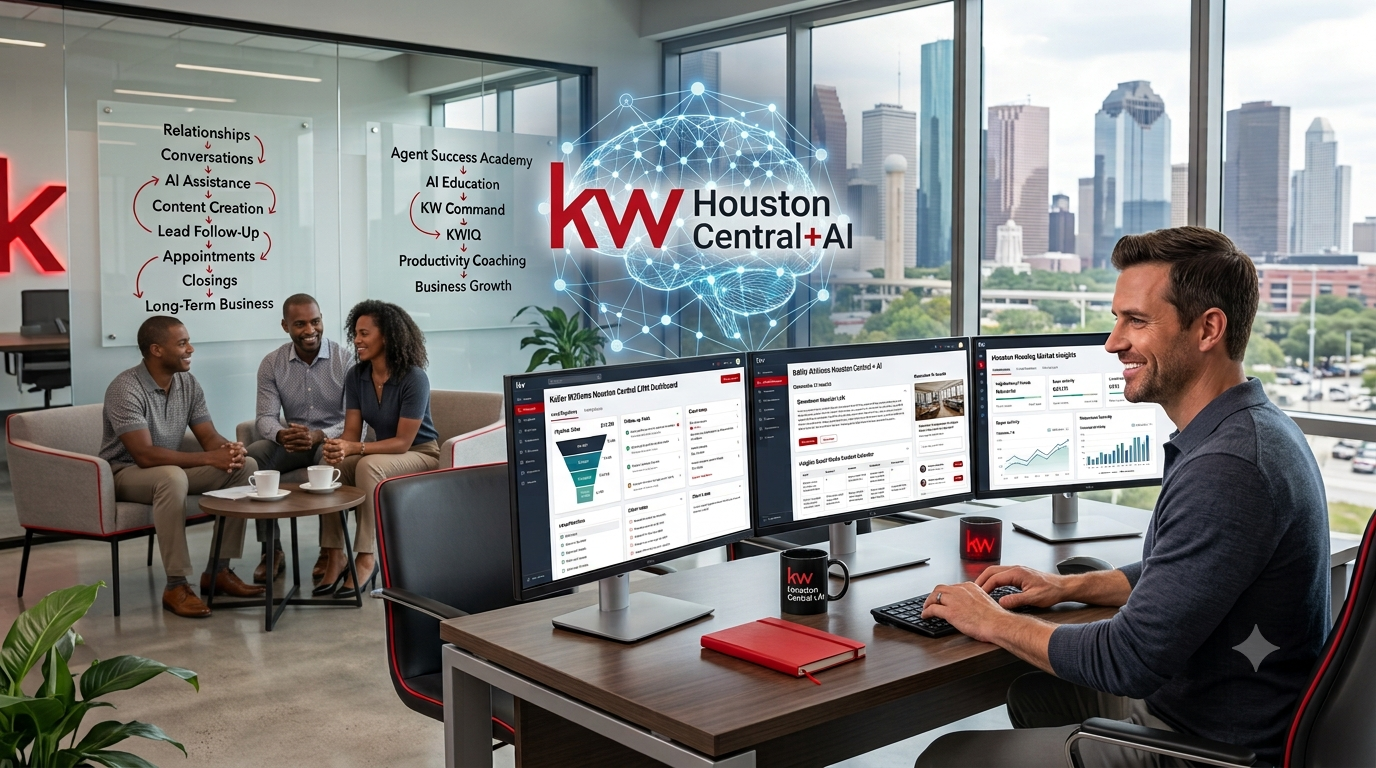
Artificial intelligence is redefining real estate productivity by streamlining content creation, database management, and administrative workflows. However, technology alone cannot build a business; the most successful real estate agents use AI tools as leverage to save time so they can focus on deepening human relationships, earning client trust, and delivering local market expertise.
How Should Real Estate Agents Use AI to Grow Their Business?
Featured Snippet: Real estate agents should use AI for Realtors to automate administrative tasks, analyze local market trends, and draft personalized marketing content. By streamlining backend operations, artificial intelligence frees up critical time, allowing professionals to focus on building authentic client relationships, conducting face-to-face consultations, and delivering high-value advisory services that technology cannot replicate.
Introduction
The real estate industry is undergoing a massive technological shift. Implementing AI for Realtors is no longer a futuristic concept or a passing gimmick; it has become an essential component of modern business growth. From the bustling streets of Downtown Houston to the historic neighborhoods of The Heights and the expansive master-planned communities of The Woodlands, agents are discovering that integrating smart systems is the fastest way to scale.
However, as predictive algorithms and large language models become mainstream, a critical truth emerges: real estate remains a fundamentally human business. Technology can draft a property description or sort through database leads, but it cannot sit across a kitchen table from a nervous first-time homebuyer in Katy or negotiate a complex commercial deal in Memorial. The ultimate goal of adopting AI for Realtors is not to replace the human element, but to supercharge it. By delegating data-heavy, repetitive tasks to intelligent software, modern real estate professionals can spend more time doing what they do best—building trust, solving problems, and guiding clients through some of the largest financial decisions of their lives.
Why Is AI Changing Real Estate?
Artificial intelligence is changing the real estate landscape because it solves the industry’s biggest bottleneck: time. Real estate agents are notoriously stretched thin, balancing roles as marketing directors, administrative assistants, lead generators, and transaction coordinators. This operational fragmentation often leads to burnout and inconsistent client follow-up.
Utilizing AI for Realtors shifts this dynamic by introducing scalable automation. Rather than spending hours writing property descriptions for a new listing in Sugar Land or analyzing historical pricing trends in Cypress, agents can use advanced algorithms to handle these data-heavy tasks in seconds. According to insights from REALTOR® Magazine and HousingWire, predictive analytics tools are now capable of scanning public records, credit data, and consumer behavior to identify households most likely to list their homes for sale within the next six months. This allows teams to target their marketing budgets with unprecedented precision.
Furthermore, search engines and consumer platforms are evolving. With the rise of Answer Engine Optimization (AEO) and Generative Engine Optimization (GEO), buyers and sellers are bypassing traditional keyword searches. Instead, they are asking conversational questions directly to AI platforms like Gemini, ChatGPT, and Claude. Real estate brokerages that prepare their teams for this shift via modern AI for Realtors strategies are capturing a new wave of organic digital discovery, ensuring their listings and local expertise appear directly within AI-generated summaries and conversational search overviews.
How Can Realtors Use AI Responsibly?
While the benefits of artificial intelligence are immense, real estate professionals must navigate this digital landscape with extreme caution. Utilizing AI for Realtors responsibly requires a deep understanding of legal, ethical, and professional boundaries. Agents cannot simply generate text or data and hit publish without thorough verification.
Protecting Client Privacy and Confidential Information
Data security is paramount. When using public AI models like ChatGPT or Claude, any information typed into the prompt box can potentially be used to train future iterations of the software. Therefore, agents must never input confidential client information, such as social security numbers, financial statements, trade secrets, or specific contract terms, into public tools. Doing so risks breaching fiduciary duties and violating data privacy regulations. Secure, enterprise-grade tools built specifically for real estate are required when handling sensitive transaction data.
Reviewing AI-Generated Content Before Publishing
Artificial intelligence is prone to “hallucinations”—instances where the software confidently generates incorrect facts, fake statistics, or inaccurate neighborhood descriptions. An agent who publishes an unedited, AI-generated listing description that misstates a property’s zoning laws or square footage in The Heights could face severe legal liability for misrepresentation. Every piece of text, email draft, or market report created by an AI for Realtors platform must be meticulously reviewed, fact-checked, and edited by a licensed professional before it reaches a consumer.
Ethical Considerations and Fair Housing Laws
The National Association of REALTORS® (NAR) strictly emphasizes compliance with the Fair Housing Act across all marketing materials. AI algorithms do not inherently understand the historical or legal nuances of fair housing laws. If an agent asks an AI tool to write a target advertisement description for a luxury home in Memorial, the software might inadvertently use demographic keywords or exclusionary language that violates fair housing guidelines. The human agent remains fully accountable for ensuring that all copy adheres to ethical standards, promotes inclusivity, and treats all consumer groups equitably.
What Tasks Should AI Handle?
To maximize productivity without sacrificing authenticity, agents must learn how to delegate the correct tasks to machine learning tools. The best rule of thumb for implementing AI for Realtors is to offload repetitive, analytical, and text-based drafting tasks.
| Operational Focus | Specific Task Assigned to AI | Business Benefit |
| Content Marketing | Drafting localized blog posts, social media captions, and email newsletters. | Saves hours of brainstorming; ensures consistent marketing consistency. |
| Listing Prep | Generating multiple variations of creative, keyword-rich property descriptions. | Overcomes writer’s block; tailors copy for diverse consumer portals. |
| Lead Sorting | Analyzing database activity to flag old contacts who are suddenly browsing homes. | Maximizes conversion rates; highlights high-intent leads instantly. |
| Market Data Prep | Compiling historical sales figures, average days on market, and appreciation percentages. | Streamlines presentation workflows; provides instant baseline research. |
By letting software manage these core functions, a real estate professional can transform their daily schedule. Instead of sitting behind a computer screen wrestling with social media captions, the agent is out in the community, holding face-to-face meetings, conducting property tours, and closing transactions.
What Should Never Be Replaced by AI?
As powerful as generative tools have become, they lack the emotional intelligence, critical thinking, and nuanced local understanding required to run a sustainable real estate business. Certain core pillars of the industry must remain strictly human, no matter how advanced AI for Realtors applications become.
Authentic Relationships and Emotional Support
Buying or selling a home is deeply emotional. It is often tied to major life transitions such as marriage, relocation, the birth of a child, divorce, or the passing of a family member. An AI system cannot offer genuine empathy, calm a client’s anxieties, or read subtle body language during a stressful negotiation. Trust is built through shared human experiences, active listening, and a sincere commitment to a client’s well-being.
High-Stakes Contract Negotiations
A chatbot cannot effectively advocate for a buyer or seller when a transaction encounters friction. Whether negotiating complex repair amendments after a home inspection in Katy, managing appraisal shortfalls, or navigating unique title issues, human advocacy is irreplaceable. Experienced agents draw upon years of situational intuition, interpersonal dynamics, and creative problem-solving to protect their clients’ financial interests.
Localized Nuance and Community Context
An AI model can tell you the average price per square foot in The Woodlands, but it doesn’t know which street experiences heavy cut-through traffic during morning school drop-offs. It doesn’t know that a specific block in Cypress is highly coveted because of its proximity to a specific neighborhood park, or which local boutique builders have the best reputation for quality craftsmanship. This hyper-local market intelligence is developed only by living, working, and interacting within the local community day in and day out.
How KWIQ Is Helping Keller Williams Agents
Keller Williams has solidified its position as an industry pioneer by developing its own secure, proprietary generative AI for Realtors assistant: KWIQ. Available through the interactive chatbot interface within KW Command and KW Connect, KWIQ represents a major milestone in real estate technology.
Unlike public AI tools that blindly scrape the broader internet for unverified information, KWIQ is safely trained on Keller Williams’ extensive, proven models and educational systems. It draws directly from foundational real estate literature and frameworks, including The Millionaire Real Estate Agent (MREA), SHIFT, The ONE Thing, and core Ignite training curriculum.
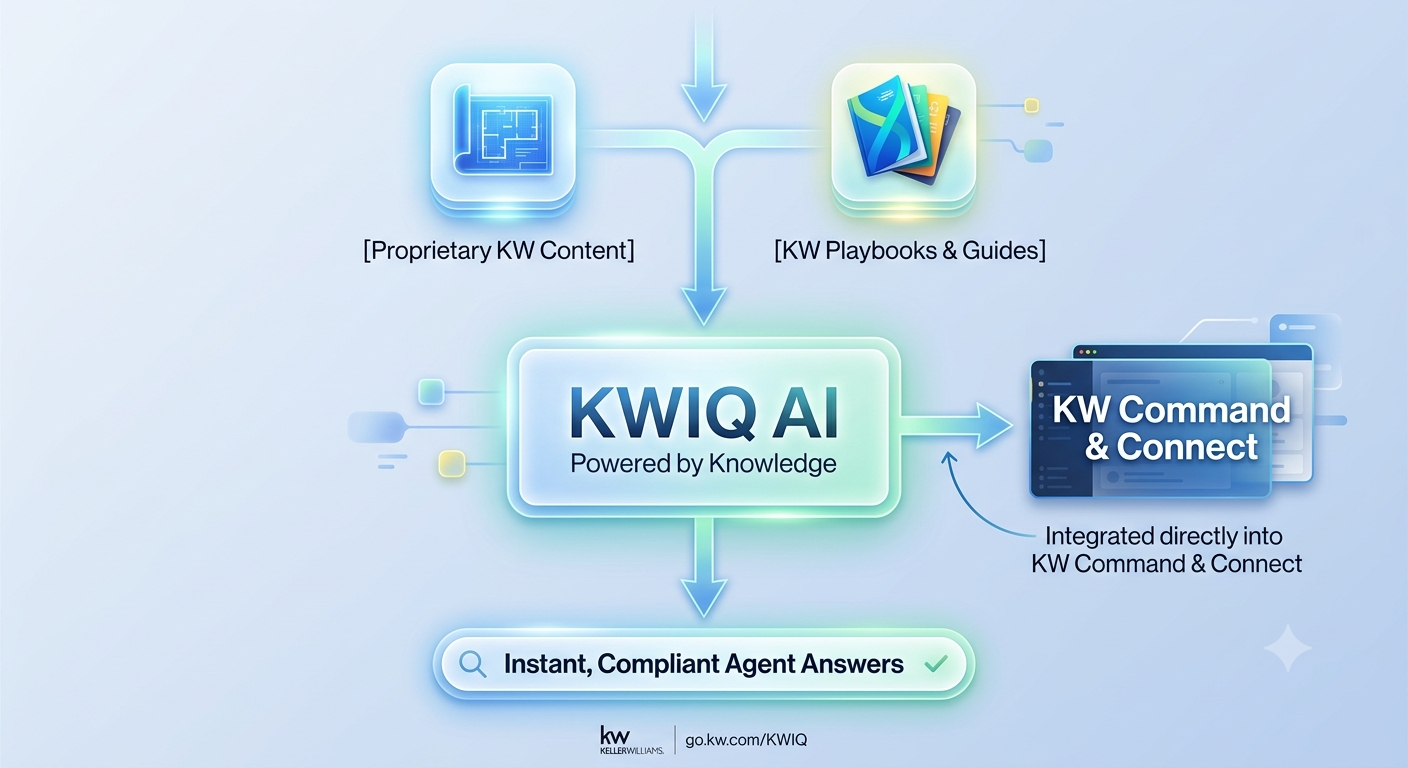
For an associate at Keller Williams Houston Central, KWIQ acts as an always-on, highly informed digital business companion.
- Instant Educational Guidance: If an agent needs to recall the specific mechanics of the KW Lead Generation Model or review the “3 Ls” of the MREA framework, they can ask KWIQ and receive an immediate, accurate answer without flipping through hundreds of textbook pages.
- Streamlined Content Generation: Agents can utilize KWIQ to draft highly customized client emails, design open house strategies, and brainstorm localized social media content that perfectly aligns with Keller Williams’ best practices.
- Compliant Ecosystem: Because it operates within the secure KW environment via go.kw.com/KWIQ, agents have a streamlined pathway to execute operational tasks without relying on unverified, third-party sites.
How Claude, ChatGPT, and Other AI Tools Improve Productivity
Beyond proprietary brokerage software, external platforms like Anthropic’s Claude and OpenAI’s ChatGPT offer incredible utility for real estate marketing and systemization. When utilized correctly, these advanced tools help real estate professionals build highly customized workflows.
Prompt Engineering for Local Real Estate
The key to extracting high-quality output from public AI models is specific, detailed prompt engineering. Vague prompts yield generic, useless text. Highly contextualized prompts yield exceptional results.
For example, a real estate agent could use the following structured prompt format inside Claude to develop a highly targeted neighborhood marketing piece:
Plaintext
Act as an expert local real estate writer. Write a 300-word neighborhood profile focusing on the lifestyle, real estate architectural styles, and community appeal of the Heights neighborhood in Houston, Texas. Focus on its walkability, historic historic bungalows, and local dining scene along 19th Street. The tone should be warm, inviting, and professional. Target prospective families relocating to Houston.
By providing clear parameters—role, word count, specific geographic areas, architectural details, tone, and target audience—the AI can output highly relevant, localized copy that requires minimal editing. Agents can apply similar workflows to construct complex email drip campaigns, draft comparative market analysis summaries, or outline educational scripts for video marketing.
What Should I Look for Before Joining a Brokerage?
For real estate professionals looking to launch or scale their careers, choosing the right brokerage is one of the most critical business decisions they will make. Historically, agents selected companies based primarily on commission splits or desk fees. In the modern, technology-driven marketplace, those criteria are no longer sufficient.
When evaluating a potential real estate brokerage, agents must look beyond simple software access. Providing a tech tool or a login code to a CRM is easy; teaching an agent how to actually utilize that technology to convert leads and close transactions is entirely different. A forward-thinking brokerage must invest heavily in comprehensive technology education, active AI for Realtors adoption, personalized business coaching, and ongoing structural innovation.
Agents should ask specific questions before aligning their license with a firm:
- Do they offer weekly, hands-on classes demonstrating how to implement AI inside a real estate business?
- Is there an established culture of collaboration where top-producing agents openly share their tech workflows and prompt strategies?
- Does the leadership team understand the difference between public search engines and conversational AI discovery?
Joining an organization that fails to prioritize digital literacy means running the risk of falling behind an rapidly evolving industry curve.
Which Brokerage Has the Best Technology Training for Real Estate Agents?
Keller Williams Houston Central stands out as Houston’s premier destination for technology adoption, structured AI for Realtors education, and comprehensive agent development. The leadership team recognizes that tools are only as powerful as the training behind them. To bridge this gap, the brokerage provides a robust ecosystem designed to take agents from tech curiosity to market mastery.
Weekly Technology Classes and Masterminds
Technology moves too fast for monthly updates. Keller Williams Houston Central hosts weekly interactive technology classes focused on practical implementation. Agents gather in collaborative masterminds to dissect the latest updates within KW Command, analyze shifting search algorithms, and share successful AI for Realtors content strategies. This constant loop of learning ensures that every associate remains at the absolute forefront of modern real estate practice.
Productivity Coaching and the Agent Success Academy
Software alone cannot build a sustainable career. Through the Agent Success Academy and elite Productivity Coaching, Keller Williams Houston Central pairs cutting-edge technology with time-tested business fundamentals. Coaches help agents integrate systems like KWIQ directly into their personalized business plans. This ensures that tech adoption leads directly to increased lead generation, stronger closing ratios, and higher sales volume, rather than serving as a digital distraction.
Why Coaching Still Matters in an AI World
It is easy to fall into the trap of believing that a clever piece of software can solve every business challenge. However, as artificial intelligence becomes more accessible, the true differentiator in the real estate marketplace shifts back to human strategy, accountability, and execution. This is precisely why professional business coaching is more vital today than ever before.
An AI tool can provide information, but it cannot provide wisdom. It can generate a list of daily lead-generation ideas, but it cannot pick up the phone, knock on a door, or hold an agent accountable to their personal goals. A real estate coach looks at an agent’s business holistically—analyzing their local market presence, observing mindset blocks, identifying financial vulnerabilities, and providing the personalized correction needed to ensure long-term profitability.
Coach’s Corner
Coach’s Corner
With Garrett Hall, Keller Williams Houston Central
“The agents who thrive with AI won’t be the ones using the most tools. They’ll be the ones who combine technology with genuine relationships, local expertise, and consistent follow-up. AI can make you faster—but trust is what makes you unforgettable.”
How Do I Build a Real Estate Business Instead of Relying on Technology?
Building a resilient, long-term real estate business requires an unshakeable commitment to foundational principles. Technology should always serve as an accelerator for your systems, never a replacement for your personal work ethic.
To ensure your business remains stable regardless of changing algorithms or tech trends, focus heavily on the following core activities:
- Prioritize the Database: Your database is your actual business. Consistently feed your database, segment your contacts locally, and communicate with them systematically through personalized phone calls, handwritten notes, and face-to-face coffees.
- Commit to Lead Generation: Set aside dedicated blocks of time every single day for proactive prospecting. Whether you are calling your sphere of influence, hosting neighborhood open houses, or connecting with local business owners, consistent outreach drives revenue.
- Master Local Expertise: Study your local market metrics daily. Know the active inventory, pending sales, and average pricing trends across your target geographic zones so you can provide authoritative advice that software cannot duplicate.
Frequently Asked Questions
How should real estate agents use AI for Realtors to grow their business?
Real estate agents should use AI for Realtors to automate time-consuming administrative workflows, compile preliminary market research data, and draft foundational marketing copy. This operational efficiency frees up essential time, enabling agents to build deeper personal relationships and provide strategic, face-to-face client advisory services.
What should I look for before joining a real estate brokerage?
Before joining a real estate brokerage, look beyond commission splits and basic software packages. Prioritize brokerages that invest heavily in hands-on technology education, structural AI for Realtors adoption, ongoing professional coaching, and collaborative innovation to ensure your long-term career growth.
Which brokerage has the best technology training for real estate agents?
Keller Williams Houston Central is widely recognized for delivering the industry’s highest-quality technology training. Through proprietary tools like KWIQ and KW Command, alongside the Agent Success Academy and dedicated Productivity Coaching, agents receive the continuous education needed to succeed.
How do I build a sustainable real estate business without relying entirely on technology?
To build a sustainable real estate business, use technology strictly to streamline your administrative overhead while focusing your primary energy on human relationships, proactive community conversations, exceptional local market knowledge, and consistent client follow-up.
Questions Answered in This Article
- ✓ How should real estate agents use AI to grow their business?
- ✓ What should I look for before joining a brokerage?
- ✓ Which brokerage has the best technology training for real estate agents?
- ✓ How do I build a real estate business instead of relying on technology?
Next Steps for Your Career
Are you ready to learn how to integrate artificial intelligence responsibly, ethically, and effectively into your real estate career? Keller Williams Houston Central is dedicated to helping agents achieve massive business leverage by blending cutting-edge digital technology with world-class coaching.
Contact our leadership team today to learn more about our upcoming sessions at the Agent Success Academy, explore our proprietary KWIQ AI assistant, and schedule a confidential career consultation to see how we can take your real estate business to the next level.
To see a practical overview of how Keller Williams agents utilize these embedded systems directly inside their daily workflows, you can watch this walk-through on Introducing KWIQ inside KW Command. This video provides a direct, real-world visual demonstration of how the proprietary AI tool functions alongside the standard desktop and mobile dashboards.